
The Science Behind TURN – Where Design Meets Decomposition
- Kristaps Cirulis
- Mar 27, 2025
- 2 min read

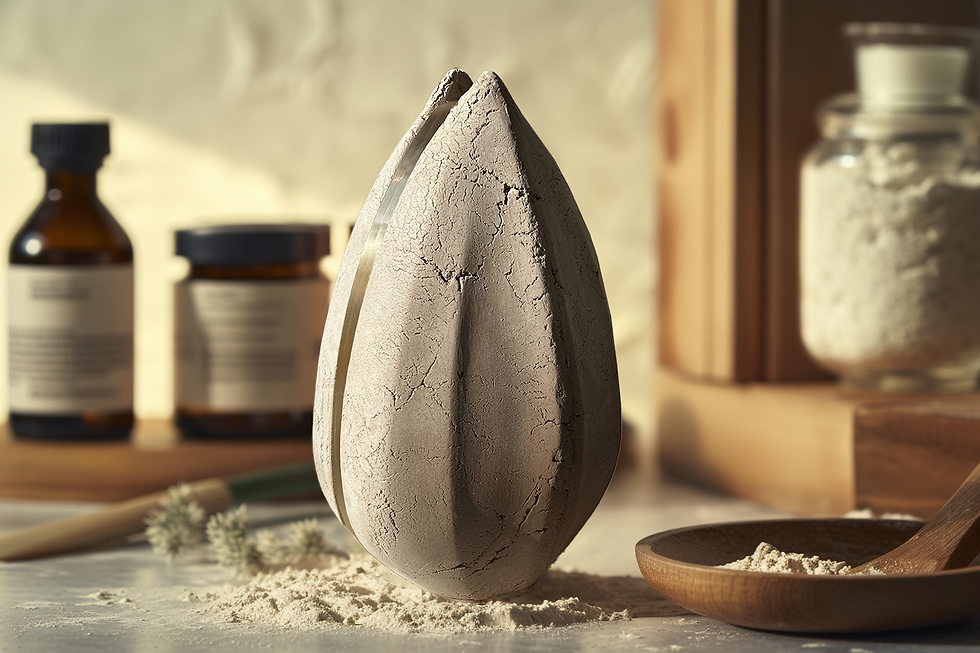
We’re not just poetic. We’re practical.And at TURN, science isn’t just behind the scenes, it’s woven into the very grain of what we create.
Because while the urn may look like a sculptural object, minimal and serene, beneath the surface lies a meticulously engineered material formula, tested in real soil, under real conditions, with a very real purpose:To return to the Earth—and give back more than it takes.
The Breakdown - Beautiful, Quiet, Clean
Most TURN urns begin to biodegrade in 3 to 6 months, depending on soil type, moisture, and temperature. Under typical Latvian conditions, the transformation starts as a slow mineralization process:
Nutrients are released: calcium, phosphorus, potassium—essential for plant life.
Soil is improved: the pH is buffered, organic matter increases, and microbial life flourishes.
Heavy metals? Tested. None. All materials fall well within EU environmental standards.
What you’re left with isn’t just absence.You’re left with fertility. With soil health. With a contribution.
Design as Ecosystem Thinking
Yes, our urns are beautiful.But we don’t design for looks alone—we design for transformation.
Each TURN urn holds memory, yes—but also possibility.Possibility for a new tree. A meadow. A wildflower bloom. A quiet forest plot that grows greener because someone chose to leave a lighter trace.
And while many products aim to last forever, ours is designed to disappear.That’s not failure. That’s the point.
From Object to Offering
So is it a burial urn?Yes.But also:
A scientific project, tested for soil health, nutrient release, and decomposition rates.
A design object, guided by aesthetics as much as by ecology.
A ritual tool, marking transition in a way that’s not heavy—but light. Not wasteful—but generative.
TURN is where design meets decomposition.Where mourning becomes meaning. Where the end becomes part of everything else.


Comments